
REVIEW · LAS VEGAS INTERACTIVE EXPERIENCES
Real Bodies at Horseshoe Las Vegas
Human anatomy, staged on the Strip. I like that a mobile ticket lets you enter any time during opening hours, and the exhibit sits on the lower level by the Flamingo Road entrance, so you can get moving fast instead of hunting.
What really makes this worthwhile is the sheer realism. You’ll work through about 20 real, preserved bodies and more than 200 anatomical specimens at your own pace, with plenty of labels and interactive details to keep you oriented.
One thing to plan around: it’s self-guided and the average visit lands around 45 to 60 minutes, so if you’re expecting a long, guided lecture experience, you might feel you could use more time (or a bit more patience).
Key highlights you will feel in your first 10 minutes

- Lower level, Flamingo Road access: You’re not buried in the middle of the casino, you’re pointed toward the Strip’s more practical entrance.
- Entry through the gift shop: It’s tucked away, but once you know that, it becomes simple to find again.
- Real specimens, not movie props: The exhibit includes 20 real bodies plus 200+ anatomical specimens.
- Self-guided pacing works: You can slow down for the details that catch your eye, then move on when you get your fill.
- Photo-friendly for non-commercial use: You can take pictures for personal sharing, as long as you keep it non-commercial.
Real Bodies at Horseshoe Las Vegas, getting there without stress

Real Bodies at Horseshoe Las Vegas is a sharp change of pace. One minute you’re walking the neon corridor, the next you’re reading and learning your way through anatomy in a calm, indoor setting.
The practical win here is location clarity. The exhibit is on the lower level, right by the Flamingo Road entrance, and it is described as being beside that main flow of casino guests. And yes, you will likely go in through the gift shop first, which is exactly the kind of detail that saves you from wandering in circles.
I also like that you can go at any time during opening hours. With a mobile ticket, you do not have to plan your whole day around a narrow time slot, which is a big deal in a city where every hour competes for your attention.
You can also read our reviews of more tours and experiences in Las Vegas.



What you actually see, 20 preserved bodies and 200+ specimens
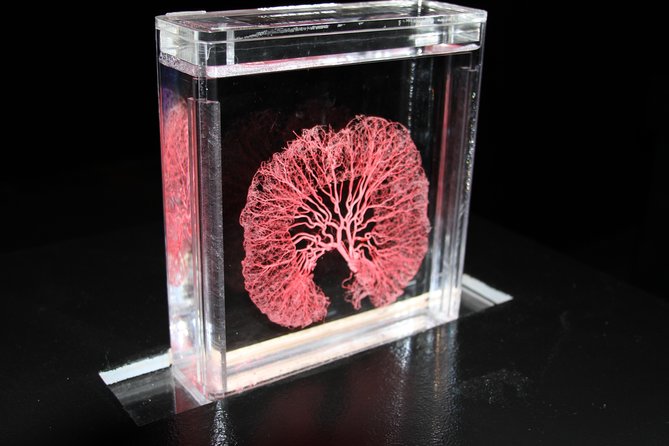
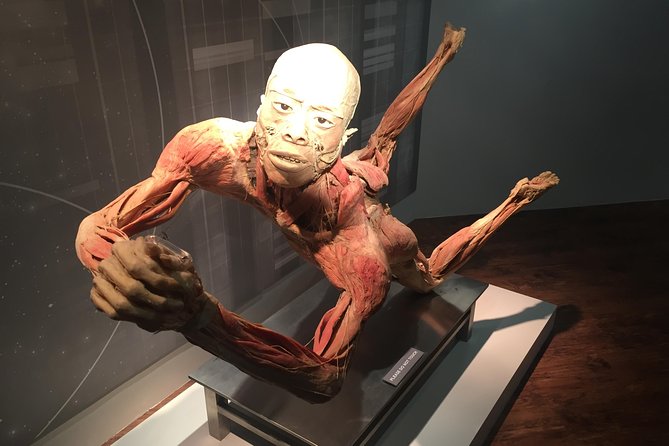
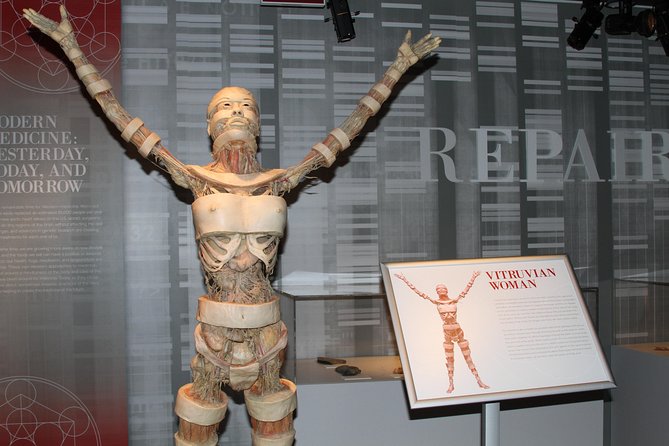
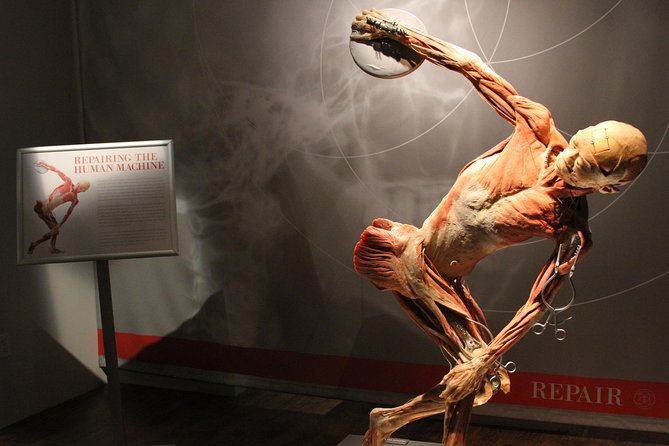
This is the core of the experience. The exhibition presents around 20 real, perfectly preserved human bodies, along with more than 200 anatomical specimens, arranged as a self-guided walk through how the human body works.
The way the displays are set up matters. Instead of giving you one flat “tour,” you move through different sections that each explain something distinct about the body, including systems you might think you know until you see how they connect. The overall theme is that the human body is not just organs in a jar. It’s mind, body, and spirit, tied together through life.
A useful context point: the preservation method is polymer preservation using liquid silicone rubber. It is described as preventing natural decay, and it can take up to a year depending on the size of the organ or the overall specimen. So you are looking at something engineered to remain stable for long viewing, not a temporary model.
Where the specimens come from is also addressed. They are provided through Dalian Hoffen Bio-Technique Co. Ltd. in China, and the data says they come from legally donated, unclaimed bodies that died of natural causes. That information is not just trivia. It helps you understand why the presentation is careful and why the exhibit focuses on scientific and educational framing.
You should also know that the content is real and detailed. The experience is described as appropriate for all ages with parental guidance, and it specifically notes that some specimens may be shown in their entirety, including model eyeballs and full genitalia. If you are bringing younger kids, have a quick conversation first about what you’ll be seeing and why you’re there.
Self-guided touring, labels that teach, and what to do with your camera
This is a self-guided exhibit, so your experience depends on how you read and how long you linger. Some visitors will move at a brisk pace, others slow down for anatomical specifics and written explanations. Either way, you are in control.
The average time is given as roughly 45 to 60 minutes to explore, but the same info says you can stay and view the galleries as long as you like. In practice, that flexibility is what turns it from a quick stop into something you can fit around your interests, whether you want a short educational loop or a longer, thoughtful walk.
I especially appreciate that the exhibit aims to be understandable. The descriptions talk about approachable displays and “bite-sized” knowledge pieces. That matters if you are not a medical professional, because you are not supposed to feel lost. You can follow along through the story the rooms are telling without needing a textbook in your hands.
Photo rules are also clearly stated. You can take photos inside for non-commercial purposes, and professional photography equipment is not permitted without prior approval. If you plan to share images with family, this policy makes it easy. It also means you should keep your phone ready, not your flashbulb.
One key practical caution: there are no restrooms inside once you begin the exhibition. Restroom facilities are near the Flamingo Road entrance on the lower level, across from the Sports Book. So do yourself a favor, use the restroom before you step into the galleries, then stay focused.
And one more “save yourself hassle” rule: no food or drinks are permitted inside. If you’re coming from brunch or a casino snack run, grab your water and a snack before you enter the exhibit area.
The second stop around the Horseshoe, anatomy storytelling in casino spaces
Your ticket includes a second portion that ties the body to a larger narrative inside the Horseshoe. The experience is described as showing the entire human experience from the first breath to the last, using dramatic, compelling gallery-style presentations.
This section is where the exhibit becomes more emotional and more “story-shaped.” Even if you came for anatomy, you’ll notice the way the rooms are framed to connect body systems to choices, identity, and humanity. The idea is not only how the body works, but what it means to live in it.
There is also language in the description about narratives transforming how you view the human body. That’s a subtle shift. You are not just looking at structures. You’re being asked to reflect on the personhood inside the biology.
The good news is that you still get to move through it at your own pace. Even if the setting feels more theatrical around you, you can slow down, read, and absorb without being swept along by a group schedule.
One drawback to keep in mind: because this is not a guided talk, you might want to bring a bit of curiosity with you. If you prefer someone explaining things out loud, you may rely on the text and your own questions while you walk.
How long to plan, and why timing matters on the Strip
Plan for about 1 to 2 hours, with the likely “average” closer to 45 to 60 minutes for the core route. The ticket description allows longer, so the real range depends on how deeply you read and whether you revisit sections.
Timing matters more than you’d think. In Las Vegas, you’ll feel the difference between arriving when the casino is buzzing and arriving when it is calmer. Since the exhibit is indoors and self-paced, it is less about “best light” and more about your energy level and your willingness to focus.
If you want a calmer read, choose a time when you are not rushing. It’s easier to process anatomical details when you’re not trying to sprint to your next reservation. Also, since there are no restrooms inside, you’ll want to avoid arriving right before you have to head out.
If you go expecting a quick educational detour, you’ll probably be satisfied. If you go expecting a slow, museum-style half day, you might feel the rooms are not big enough for that kind of stretch. The flexibility to stay longer can help, but it will not turn it into a multi-hour lecture.



Price and value, $33.38 that can either feel fair or a bit steep
The price listed is $33.38 per person, and it includes admission plus all taxes, fees, and handling charges. That matters because in Las Vegas, the surprise add-ons can quietly inflate your budget. Here, the total is the total you plan around.
So is it good value? For the right visitor, yes. You get real specimens, substantial display counts (20 bodies and 200+ specimens), and a self-guided route that you control. You can also take photos for personal, non-commercial sharing, which adds practical value if you want to show what you learned.
Where value can wobble is expectations. If you are someone who compares every anatomy exhibit you see to a top-tier university museum or a very long, multi-room campus tour, you may feel it is a bit short. A few comments also described it as straightforward or not the most detailed version they’ve seen elsewhere, and at least one person felt the price was on the high side.
My advice: think of this as a focused science stop, not a full-day “Vegas museum.” If you’re fitting it between shows, meals, and walking time, it can be a strong use of your day.
Who should book, and who might want to think twice
This is a solid choice for science lovers, curious adults, and anyone who likes real-world education over staged entertainment. The exhibit is described as informative and approachable, and the self-guided pacing helps both first-timers and repeat learners.
If you work in healthcare or you’ve studied anatomy before, you’ll likely appreciate the detail. One comment from a registered nurse and another from a physician assistant highlight how the exhibits can still teach after years in practice, including anatomy and kinesiology takeaways. That doesn’t mean it replaces training, but it does suggest the presentation can be more than surface-level.
For kids, it’s complicated in a helpful way. The experience is said to be for all ages with parental guidance, and that guidance is not just generic. The description notes full genitalia may be shown on some specimens, and that is exactly the sort of detail that changes the conversation. If your kids are curious and able to handle it, great. If they are sensitive or young, consider whether you want to shield them from that reality.
One more “fit” question: do you want a live explanation? Because this is self-guided, you will rely heavily on the signage and your own reading. If you like museum labels and structured room storytelling, you’ll likely enjoy it more.
A practical checklist before you walk in
Here’s how to make your visit smoother with minimal guesswork.
- Use the restroom before you enter, because there are no restrooms inside the exhibition.
- Skip snacks and drinks inside. Food and drinks are not allowed once you’re in.
- Bring a phone charger mindset, since you can take photos for non-commercial sharing, but professional gear needs prior approval.
- Expect a self-guided flow. If you need answers fast, give yourself extra time to read and look around.
Also, since this is on the lower level, budget a minute to find the right route once you’re inside the Horseshoe. The entry through the gift shop is the sort of detail that makes navigation easier if you remember it.
Should you book Real Bodies at Horseshoe Las Vegas?
I think you should book if you want a real anatomy experience that is easy to fit into a Vegas day. The value is strong when you like self-guided learning, and the format gives you control over how long you linger over details.
You should pause before booking if you prefer a guided lecture, or if you are bringing very young kids who might be overwhelmed by the realism. This is not a cartoonish or sanitized version of anatomy. It is designed to be scientific and direct, and that can be intense.
If you do book, my best tip is simple: plan for 1 to 2 hours, use the restroom first, and go in expecting a thoughtful science walk rather than a show. Then it becomes exactly what it is meant to be, a memorable, honest look at the body you live in.
FAQ
Where is Real Bodies at Horseshoe Las Vegas located?
The exhibit is inside the Horseshoe Las Vegas on the lower level, right by the Flamingo Road entrance. You’ll want to look for the entrance that leads from the lower-level area near the venue access point.
How long does the visit usually take?
The average time to explore is about 45 to 60 minutes, though you are welcome to stay and view the galleries as long as you like. The overall experience is also listed as about 1 to 2 hours.
Is the tour self-guided?
Yes. You explore the exhibition at your own pace as a self-guided tour.
Can I take photos inside?
Yes, you can take photos for non-commercial purposes. Professional photography equipment is not permitted without prior approval.
Are restrooms available once I enter the exhibition?
Restrooms are available near the Flamingo Road entrance to the lower level, across from the Sports Book. There are no restrooms once you are inside the exhibition.
Is food or drink allowed inside?
No food or drinks are permitted inside the exhibition.
Is the ticket refundable?
No. The ticket is non-refundable and cannot be changed for any reason.
More Tour Reviews in Las Vegas
Not for you? Here's more nearby things to do in Las Vegas we have reviewed











More Las Vegas Interactive Experiences
 ★ 4.0Shark Reef at Mandalay Bay Hotel and CasinoFrom $291,102 reviews
 ★ 4.3Shark Reef Aquarium Entry TicketFrom $29892 reviews
 The Sphere Experience — The Wizard of Oz823 reviews
 ★ 5.0The Escape Game Las Vegas: 60-Minute Adventure at The Forum ShopsFrom $42371 reviews
 ★ 4.5The Official SAW Escape Room in Las VegasFrom $53250 reviews
 ★ 5.0The Cabin Escape room experience in Las VegasFrom $41169 reviews
 ★ 5.0Suzys Cell Escape GameFrom $4198 reviews
 ★ 5.0Witch House Escape Room in Las VegasFrom $4090 reviews
More ways to spend the day