
REVIEW · LAS VEGAS INTERACTIVE EXPERIENCES
Las Vegas: Discovering King Tut’s Tomb Exhibit at the Luxor
King Tut’s tomb feels close in Vegas.
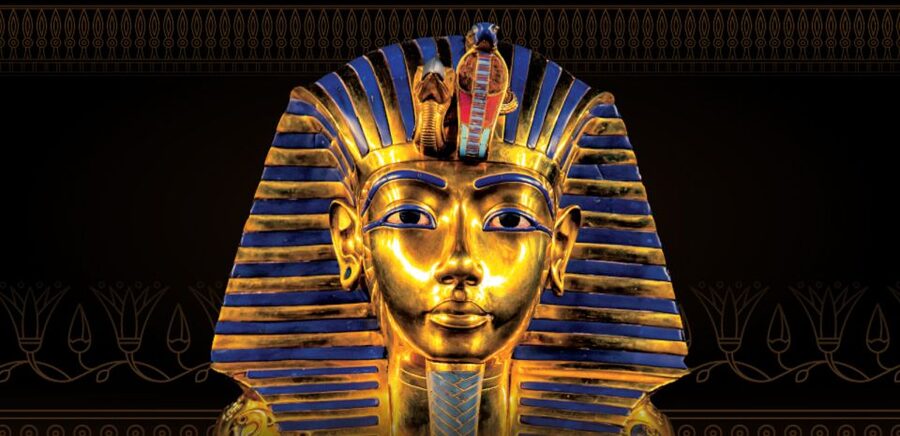
At the Luxor, Discovering King Tut’s Tomb uses a 3D virtual recreation to tell the story of King Tutankhamen, from the ancient Egyptian beliefs around the afterlife to the real-world 1922 discovery.
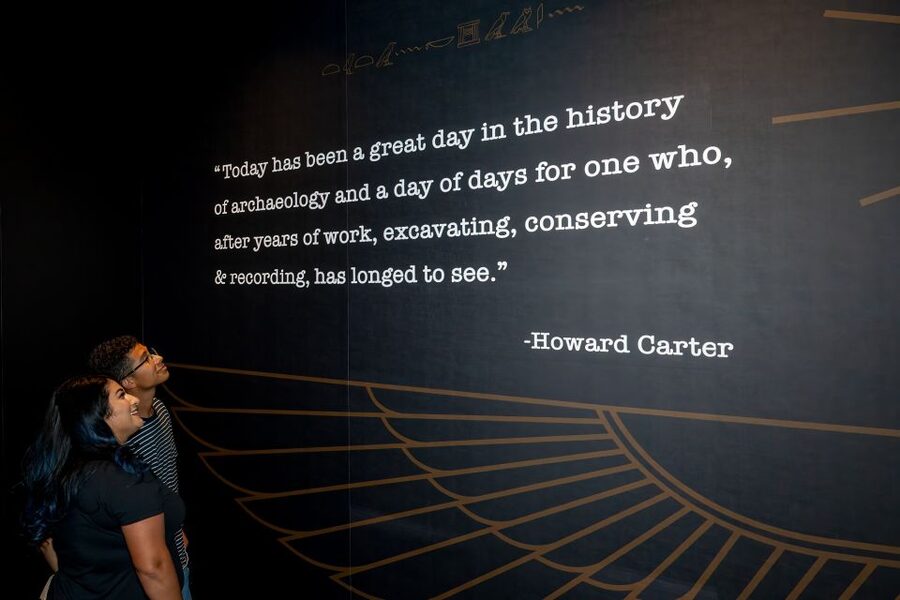
Two things I really like: the painstakingly reproduced replica treasures and the way the exhibit walks you step by step in Howard Carter’s footsteps. I also enjoy how the experience connects artifacts and symbolism to people, not just dates.
One consideration: it’s a virtual exhibit, so if you are expecting to see the original, fragile objects up close in person, this may feel like a different kind of experience. Also, tickets are non-refundable, so pick your day and start time with care.
Key things to know before you go
- 3D walkthrough of the excavation and tomb as they were at the moment of discovery
- Two-part story that moves from King Tut’s world to Howard Carter’s hunt
- Replica artifacts and statues made by expert Egyptian craftsmen with Egyptologists’ input
- A guided archaeology angle focused on challenges, triumphs, and the process of discovery
- Open daily 10:00 am to 8:00 pm, with last admission at 7:00 pm, so plan around closing
Where this King Tut experience works best in Las Vegas
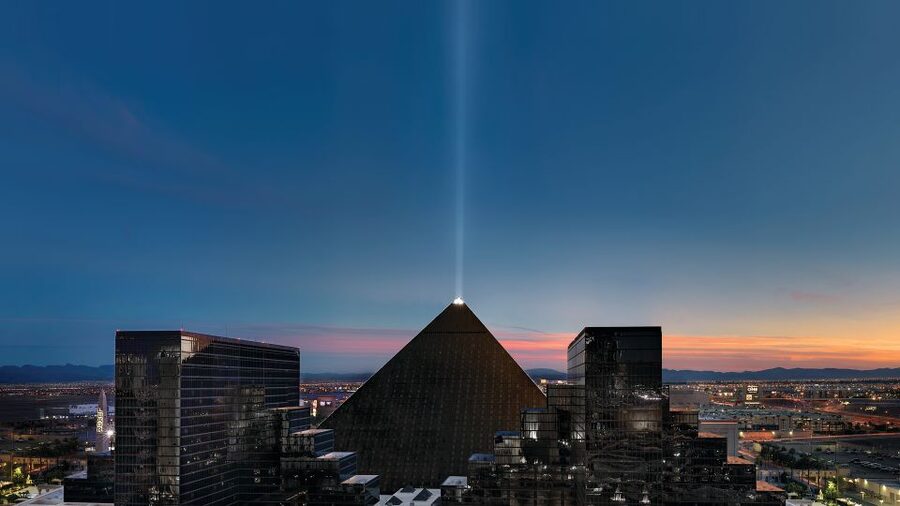
If you want one strong “culture ticket” in the middle of a Vegas trip, Discovering King Tut’s Tomb is a smart fit. It is inside the Luxor, which keeps the whole outing simple. You do not need a car, and you can choose a start time during the day.
What I like is the focus. This is not just a background documentary about ancient Egypt. It is built around one of the biggest moments in archaeology, the 1922 discovery of King Tutankhamun’s tomb, and it uses media plus physical objects to make that story easy to follow.
You also get a clear reason to care about the details. The exhibit frames King Tut’s tomb as both an artifact-filled treasure and a human story, shaped by belief, craftsmanship, and discovery. That balance is what makes it more than a quick stop.
You can also read our reviews of more tours and experiences in Las Vegas.



The two-part route: King Tut’s world, then Howard Carter’s quest
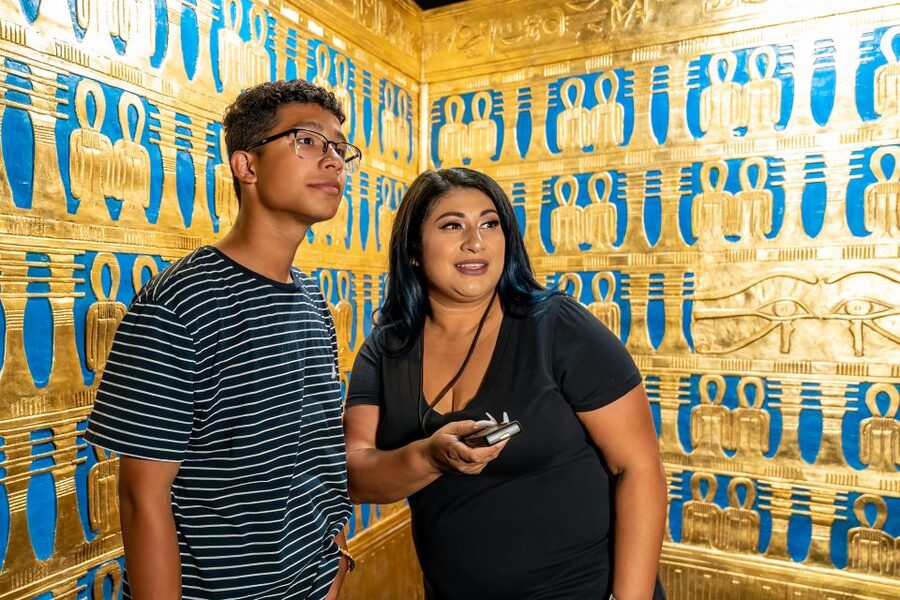
The exhibit is set up in two parts, and the switch between them is what keeps the visit moving. In the first area, you go back to the time of King Tutankhamun. You get a wealth of information about the wider culture of ancient Egypt, including how Egyptians thought about the afterlife.
This matters because it gives context for why the tomb looked the way it did, and why so many objects were included. Without that, you might see artifacts as just “cool old stuff.” With it, you start connecting the dots between belief and design.
In the second area, the tone changes from ancient world to modern discovery. You follow Howard Carter and the greatest adventure of his career, including the challenges and triumphs of uncovering the lost tomb. The story is placed about 100 years after the discovery, which adds a sense of legacy and continued fascination.
If you like history that feels like a narrative, this structure works well. It is part mythology and belief, part real-world investigation.
Stepping into the 3D excavation and tomb recreation
The headline feature is the chance to step inside a fully three-dimensional, accurate recreation of the excavation site, the tomb, and its treasures. The exhibit presents these elements as they were at the moment of their discovery.
That level of “as seen then” detail is a big deal. Instead of imagining what explorers might have found, you are shown the layout and the discovery scene in a way that helps your brain map the process. It is easier to understand how archaeologists work when you can see the space and the sequence.
You also get the sense of being in the story with a limited cast of people. The exhibit frames the scene as something only witnessed by Howard Carter and a handful of others. Even though the setting is reconstructed, the storytelling angle helps you appreciate how rare and risky real discovery can be.
One practical note: this kind of experience rewards pacing. If you rush through, you might miss the “why” behind the visuals. Build in a calm mindset, and let the 3D space do its job.
Why the replica treasures feel special without harming originals
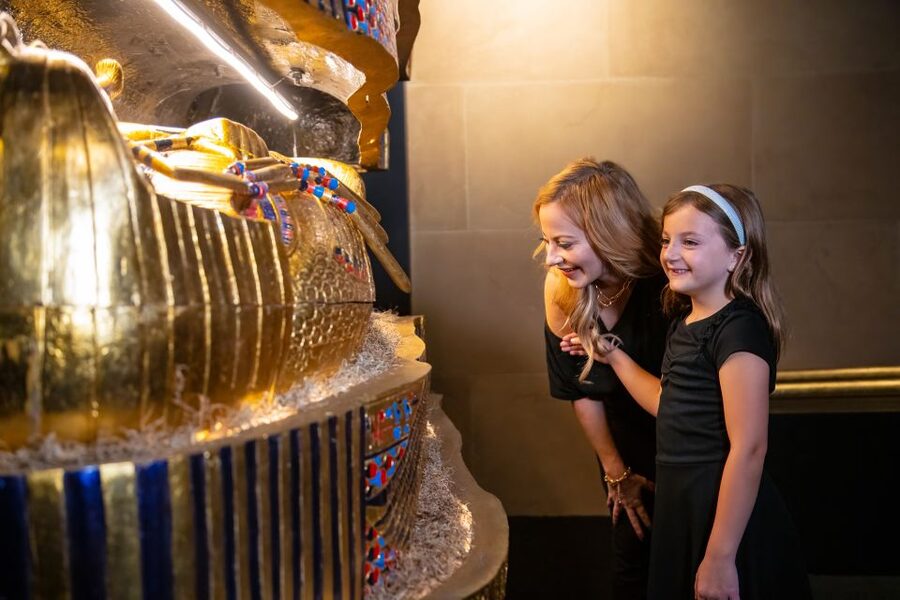
A lot of exhibits show artifacts behind glass. This one uses a different approach: it includes painstaking replicas and explains the reasoning. The show uses expert Egyptian craftsmen who made reproductions in consultation with renowned Egyptologists.
That means you can enjoy these priceless Egyptian treasures without harming the fragile originals. From a visitor point of view, it is a relief. You get the visual impact, the art, and the sense of scale, without the tension of protecting real objects that must stay untouched.
It also answers a common question you might have going in: why do replicas look convincing here? The exhibit’s answer is process. The replicas were produced to match details, not just to create a vague “Tut” vibe.
This is also where the strongest praise shows up in the real-world reactions. People point to the statues and artifacts as amazing, and that lines up with the exhibit’s emphasis on reproducing the tomb’s treasures. If you care about the objects themselves, this part is likely to be your favorite.
How the exhibit connects artifacts to afterlife beliefs
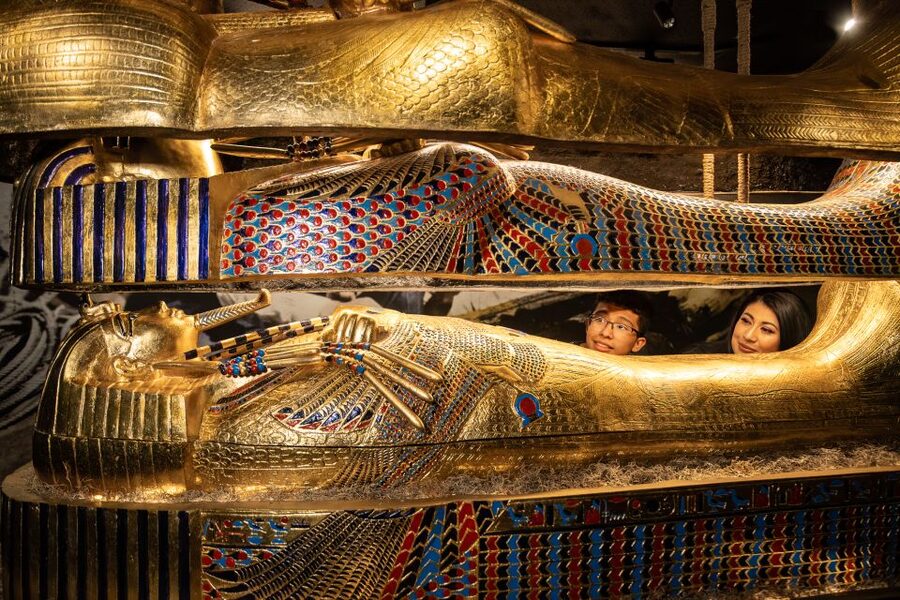
The first part of the experience is where the exhibit builds its foundation. You learn about ancient Egyptian belief in the afterlife, which you can then carry into the second part as you watch the discovery unfold.
I like this approach because it avoids a common trap. Many Egypt experiences drop you into symbols and objects first, then hope you figure out what they mean. Here, the belief piece comes early, so the objects and the burial setting make more sense.
You also get a sense of people, not just royalty. The wider culture of ancient Egypt is part of the setup, so King Tutankhamun’s tomb is not presented like a standalone pop-culture moment. It is presented as part of a broader world view.
If you want an entry point that feels both visual and meaningful, the belief context helps. It gives you language for what you are seeing.



Timing your visit: open daily, last admission at 7:00 pm
This is an easy one to plan because the hours are clear. The experience is open daily from 10:00 am to 8:00 pm, and last admission is at 7:00 pm.
You will want to treat it like an actual timed visit, not something to “fit in anytime.” Since last admission is 7:00 pm, plan to arrive with enough buffer if you are also doing other Luxor stops before or after.
Also, your ticket is valid for one day, and starting times depend on availability. That is useful if you are scheduling around shows or meals. Pick the time when you are most alert, because the exhibit asks you to follow a storyline and pay attention to details.
Price and value: is $40 worth it?
The price is $40 per person, and it includes entry to Discovering King Tut’s Tomb. For many people, the value question comes down to one thing: what are you buying besides “time inside a room”?
You are buying access to a reconstructed 3D scene of a major archaeological moment. You are also buying replicas of the tomb’s treasures made by expert craftsmen and supported by Egyptologist consultation. That combination is what turns it from a simple walkthrough into a guided learning experience.
One more value angle is the ethics built into the concept. You get the chance to see treasures in a way that does not require handling or risking fragile originals. If you care about preservation and how museums approach conservation, this matters.
Finally, the non-refundable nature means you should choose your slot carefully. If you are the kind of traveler who tends to change plans at the last minute, factor that in before you buy.
Who this experience suits best
This exhibit is a good match for anyone who likes history with a clear storyline. The Carter angle helps make the archaeology feel like action, not just facts. If you also care about Egyptian culture and afterlife beliefs, the first part gives you context that keeps the second part from feeling random.
Families can also do well here, with one condition: guests under eighteen must be accompanied by an adult. Children ages three and under are free with no ticket required, so the youngest kids can usually come along without added cost.
Wheelchair access is listed, which is important for planning. If mobility is a concern, you can feel more confident that the exhibit is designed with access in mind.
Who might skip it? If your goal is to stand next to original King Tut artifacts in a traditional museum setting, this may not match that desire. It is built around replicas and reconstructed scenes.
Things to do before and after, so it feels like a real outing
Because this is in the Luxor, you can pair it with other indoor stops in the same area. Plan your day around the last admission time, then leave room afterward for a slower pace. The exhibit is the kind of activity that works best when you can process what you saw without rushing.
If you like taking notes, bring a small notebook or phone notes. The story moves between ancient Egypt beliefs and Carter’s discovery work. A few quick notes can help you remember connections, like how the afterlife ideas connect to the tomb’s purpose.
Also, give yourself permission to linger in the 3D spaces. The exhibit is designed so you can step inside the excavation and tomb recreation, and that visual work benefits from extra seconds, not speed.
Should you book Discovering King Tut’s Tomb at the Luxor?
Book it if you want a focused, story-driven introduction to King Tutankhamun and the 1922 discovery that changed archaeology. I think it is especially worth it when you care about the objects themselves, since the show emphasizes statues, artifacts, and carefully made replicas. The Howard Carter storyline gives the whole visit momentum.
Consider skipping or swapping to a different kind of Egypt outing if your top priority is seeing the original, fragile treasures in person. This experience is built to protect the originals by showing replicas and reconstructed scenes, and that difference may matter to you.
If you do book, choose a time well before 7:00 pm. Tickets are non-refundable, so pick a schedule you can keep. Then go in with a simple goal: learn what Egypt believed, watch how discovery happened, and pay attention to the details in the replicas.
FAQ
What is included with the ticket?
Your ticket includes entry to the Discovering King Tut’s Tomb exhibit.
How much does it cost?
The price is $40 per person.
How long is the experience?
It is listed as lasting 1 day, based on the time slot you choose.
What are the opening hours?
The exhibit is open daily from 10:00 am to 8:00 pm, with last admission at 7:00 pm.
Is it wheelchair accessible?
Yes, the experience is wheelchair accessible.
Are there age rules for kids?
Guests under eighteen must be accompanied by an adult. Children ages three and under are free and do not require a ticket.
Is the ticket refundable?
No, this activity is non-refundable.
Do I need to check for a specific start time?
Yes, the ticket is valid 1 day and starting times depend on availability, so you should check the available time slots.
More Tour Reviews in Las Vegas
Not for you? Here's more nearby things to do in Las Vegas we have reviewed











More Las Vegas Interactive Experiences
 ★ 4.0Shark Reef at Mandalay Bay Hotel and CasinoFrom $291,102 reviews
 ★ 4.3Shark Reef Aquarium Entry TicketFrom $29892 reviews
 The Sphere Experience — The Wizard of Oz823 reviews
 ★ 5.0The Escape Game Las Vegas: 60-Minute Adventure at The Forum ShopsFrom $42371 reviews
 ★ 4.5The Official SAW Escape Room in Las VegasFrom $53250 reviews
 ★ 5.0The Cabin Escape room experience in Las VegasFrom $41169 reviews
 ★ 5.0Suzys Cell Escape GameFrom $4198 reviews
 ★ 5.0Witch House Escape Room in Las VegasFrom $4090 reviews
More ways to spend the day