
REVIEW · DEATH VALLEY TOURS FROM LAS VEGAS
Death Valley Day Trip from Las Vegas
One day in Death Valley feels unreal. This full-day guided trip strings together the park’s most memorable stops, starting with the ghost town of Rhyolite and ending with big viewpoint time at Zabriskie Point. I like that you get hotel pickup and drop-off plus breakfast, lunch, snacks, and bottled water, so your only job is showing up with a camera. The main drawback is the early start and the long time in desert temperatures, even with water and planned breaks.
The upside is that the drive is handled for you. You also get a real guide in the mix, the kind who can explain why the salt flats look like they do and how the colors in Artist’s Palette form, not just read a list of stops. If you hate rushing, plan on taking some photos quickly and saving your best moments for the longer viewpoint areas.
Key things to know before you go
- 7:00 AM departure from Las Vegas keeps the day efficient and gets you into the park early
- Meals and water are included (breakfast, lunch, snacks, bottled water), so you are not hunting for food in the heat
- Rhyolite is your first stop, giving you that Gold Rush eerie vibe before you hit the big Death Valley sights
- Multiple iconic areas in one day including Mesquite Flat Sand Dunes, Badwater, Devil’s Golf Course, Artist’s Palette, and Zabriskie Point
- Small-group feel most of the time, with a cap of no more than 14 guests and vehicle comfort plus air-conditioning
A guided Death Valley day that actually feels doable
This is the kind of day trip that works because it removes the two biggest burdens: driving in a remote area and planning meals and timing. You start with an easy hotel pickup in Las Vegas and finish with drop-off after a roughly 10-hour loop.
The tour also keeps you fed on purpose. Breakfast, snacks, and bottled water are included, and lunch comes in several options you can request ahead of time. That matters in Death Valley, because once you are focused on staying hydrated, you can enjoy the scenery instead of doing mental math about when the next store might appear.
One practical detail I appreciate: the day includes lots of short stops where you can step out, stretch, and reset. That means less time stuck in traffic at the exact moment the sun is beating down.
More Las Vegas tours and experiences for the shortlist

Leaving Las Vegas early, and why it matters in the desert
The tour kicks off at 7:00 AM, with pickup offered from most hotels on the Strip and Downtown. That early departure is not just a schedule flex. It’s a strategy for getting better light, fewer crowds at popular viewpoints, and more comfortable walking windows.
You will travel west through the Mojave Desert on an air-conditioned vehicle, and the comfort level depends on what you’re assigned. The tour can run in a seven-passenger luxury SUV, a custom 12-passenger VIP mini-coach, or a 14-passenger VIP touring mini-coach.
A few reviews I read also point to the same reality: on hotter days, a good guide adjusts the order of stops so you are not exposed to the worst heat for no reason. That is not guaranteed every day, but it’s a strong sign that the operation pays attention to conditions rather than chasing an inflexible checklist.
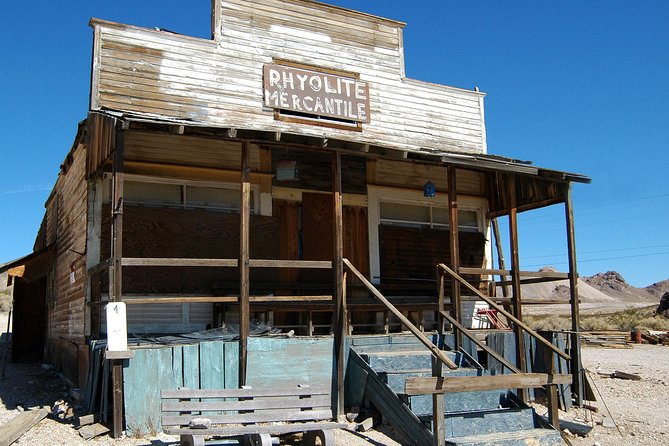
Rhyolite ghost town: the eerie warm-up before the park
Before you even reach the main Death Valley areas, you stop in Rhyolite, a long-abandoned gold mining town. The vibe here is instantly different. You get crumbling ruins, scattered structures, and a surreal feel that sets you up for what Death Valley is going to look like later.
This stop is timed well for a one-day trip, with about 35 minutes on the ground. Admission is included, which is nice because it means you don’t have to juggle a separate pay station once you arrive.
What I like about starting here is the contrast. You go from human ambition and collapse to a place where the land itself does the talking. Even if you’re not a “history person,” Rhyolite gives you an easy entry into the stories the guide will connect later, like how people once tried to mine and live in an environment that simply resists that idea.
Mesquite Flat Sand Dunes for photographers who want results
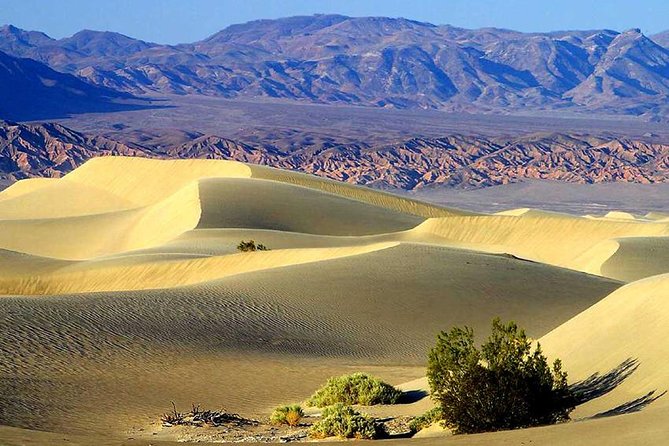
Next comes Mesquite Flat Sand Dunes, where the terrain changes again. You get sweeping desert views and that classic dune texture that looks almost sculpted when the sun hits from the right angle.
You get about 25 minutes here, plus admission is included. That’s enough time to walk out for a few shots, find a stable spot to frame, and then return before the day’s temperature starts to feel like it’s following you personally.
Practical tip: wear shoes you trust on sand and rock. Even when you are not doing a big hike, you want traction and ankle support, especially if it’s windy or uneven underfoot. And if you want low-angle photos, arrive with a plan for where you can kneel safely without digging your feet into trouble.
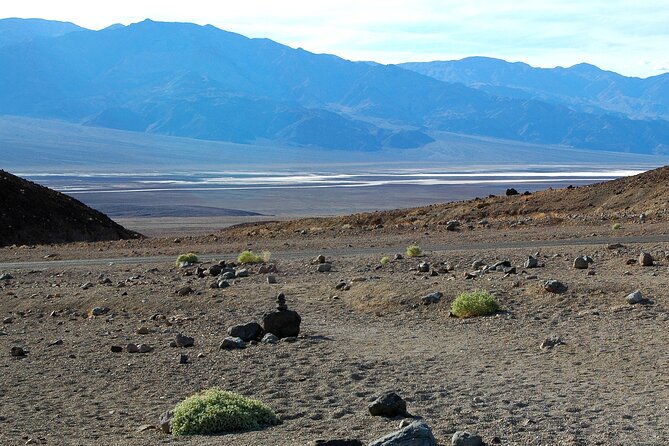
Furnace Creek Visitor Center, Hell’s Gate, and the road down to Badwater
At Furnace Creek Visitor Center, you get the best “get your bearings” moment on the whole trip. The environment here is extreme, and the visitor center helps you understand what you’re seeing before you’re staring at salt pans and assuming it’s all just random weirdness.
This stop is about 30 minutes. The way the day is described, you’ll take in views from Hell’s Gate first, which sits high above the valley floor, and then you descend toward Badwater Basin, which is 282 feet below sea level.
That high-to-low progression is more than geography trivia. It’s a fast way to understand how the park works visually. From Hell’s Gate, the valley looks like a painting with strong shapes and layers. At Badwater, the ground changes from “distance shapes” to “up close texture,” including the bright, white salt area that’s famous for a reason.
The visitor center stop is also where you benefit from a relaxed pace. Some guides in this style of tour build in time to browse, use facilities, and take a breath before heading back out into the sun.


Badwater Basin and the salt flat stops that make Death Valley look fake
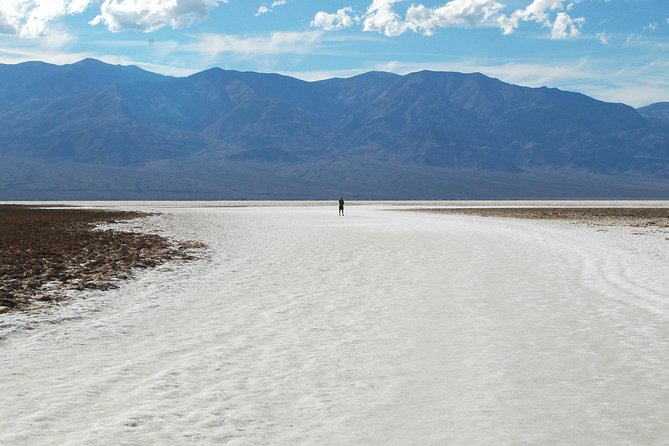
Badwater is the headline. The white expanse is so distinctive it almost feels staged, but it’s the opposite of fake. Salt deposits, the dryness, and the way the basin sits all combine to create that surreal look.
You get around 20 minutes here, and your guide also folds in scenic stops in the same general region, including spots like Salt Lake, the Furnace Creek Museum, and additional dune or viewpoint photo moments depending on conditions. Admission is listed as free for the Furnace Creek Visitor Center and Badwater portion.
Here’s the thing: Badwater Basin photos can disappoint if you arrive with expectations shaped by Instagram. The best approach is to treat this as a light-and-texture stop. Watch how the brightness changes as clouds shift or as the sun moves. If you can, frame your shots with small reference points like rocks or people-sized silhouettes to make the scale land.
Devil’s Golf Course: where the salt turns into texture
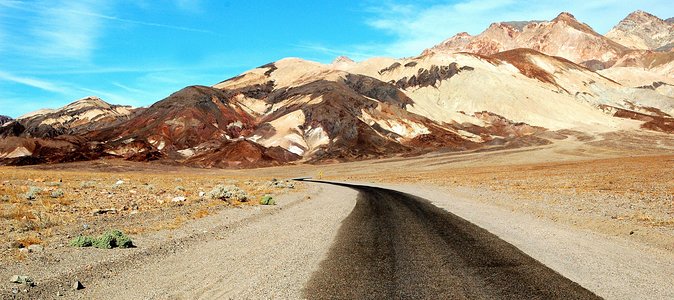
Devil’s Golf Course is one of those places where you instantly understand why people compare it to a game board. The ground looks sculpted, patterned, and impossibly flat, with salt formations that feel like they should be sitting under a microscope.
You get about 15 minutes at this stop, and admission is included. The guide will explain how these salt pinnacles formed and how the area connects to an ancient salt lake story.
If you want a quick strategy for the photos: look for angles that show texture rather than only the color. The shapes are what sell it. And if it’s very bright, don’t be afraid to step slightly to one side and wait for your camera exposure to behave.
Artist’s Palette: the mineral colors that actually change the feel of the drive
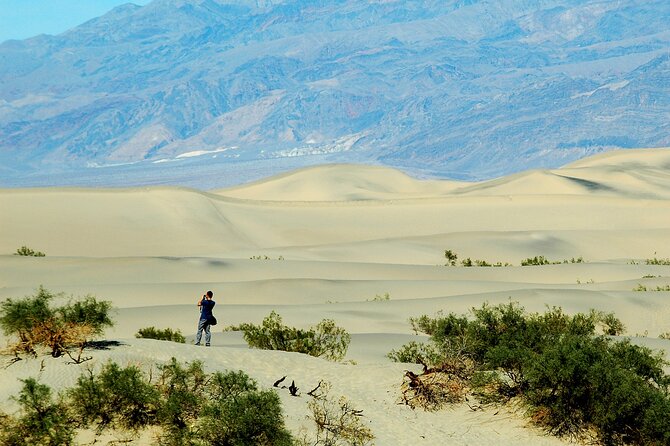
Artist’s Palette is less about a single “look at me” moment and more about a whole series of color transitions as you move along. The hills show mineral colors that can read as pink, orange, purple, and yellow depending on light and distance.
You get about 20 minutes here, with free admission for this portion. This is also where the tour’s photography advantage shows up. Short windows at several stops can still work if your guide knows where to pause for the best angles.
Practical advice: bring something to protect your gear from blowing grit, especially if it’s windy. And if you’re planning to print or crop heavily later, take more shots than you think you need. Color in desert minerals is sensitive, so having extra frames gives you options.
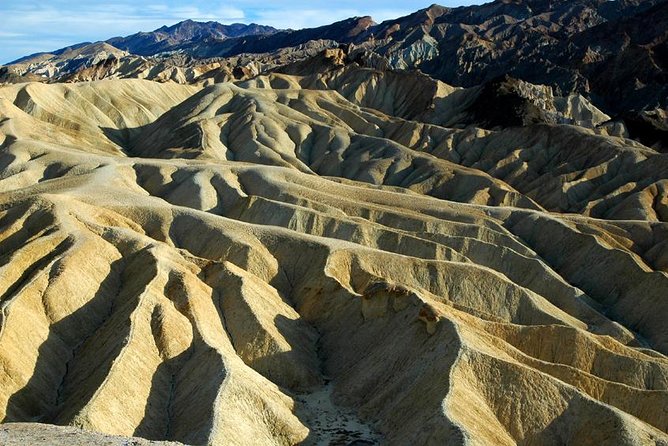
Zabriskie Point: iconic panoramas, plus a short hike
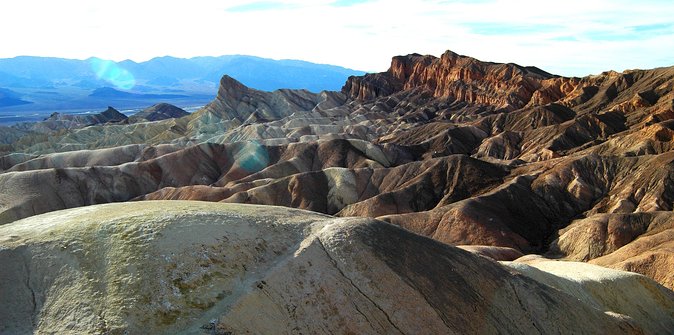
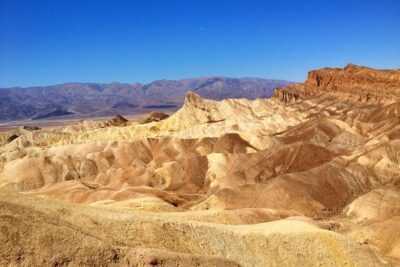
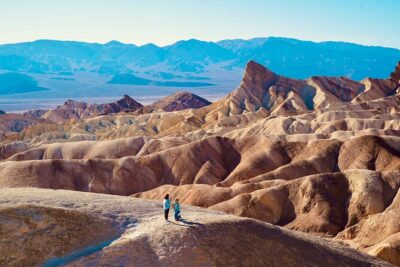
Zabriskie Point is where the day ends in big, dramatic scale. You get panoramic views over the valley, and the day description includes a short hike for those who want the closest experience of the viewpoint.
This stop runs about 25 minutes, and admission is included. It’s one of the best places to slow down for a minute, because the views can swallow your sense of distance. If you only have energy for one “linger” stop, make it this one.
Also, don’t ignore the wind and sun here. Point-and-shoot photos often look best when you stand in a stable spot and let the landscape do the work. If you’re bringing a tripod, be ready for fine sand or gravel that can mess with legs.
Food, water, and rest stops that keep the day from turning into survival
The food setup is one of the most practical reasons this tour is worth considering at this price point. You start with breakfast plus juice, and then you get snacks like peanuts, cheese, muffins, and additional snack breaks during the day. Bottled water is included.
Lunch comes with several options if you choose when booking: ham, turkey, deluxe turkey with cranberry sauce and stuffing plus mayonnaise, Italian with Genoa salami, capicola, and prosciutini, veggie, and garden salad with vinaigrette.
What you should expect is not luxury, but it is dependable. And in a full day like this, “dependable” is worth a lot. When you know you will get fuel at set times, you can focus on the scenery instead of calculating whether you can make it to a gas station before you start feeling lightheaded.
If you are the type who needs bathroom breaks, this tour has regular stops. Several guide-led days describe plentiful bathroom opportunities, which makes a long outing much more comfortable.
Guides make the difference, and you’ll notice it fast
A guided Death Valley day lives or dies on explanation. Good guides connect the dots: geology, wildlife adaptation, and the human stories that drove mining towns like Rhyolite into existence.
This tour’s guides are often praised by name in the reviews I reviewed, including Art, Dennis, Michael, Clayton, and Marcus. Across those comments, the strongest pattern is that the guides mix facts with real care. Art and Dennis stand out for running commentary that stays relaxed rather than turning into a lecture, and for helping guests find good photo angles.
There’s also a practical service element. On at least one day, Art helped a guest structure the order of sights so they could still make an evening concert in Las Vegas on time. That’s the kind of flexibility that can matter if you have plans later that night.
If you want maximum info from the guide, come prepared with a couple of questions. Ask why the ground looks the way it does, ask about the mineral colors, and ask what to look for at each viewpoint. Then you’ll get more out of the small time windows at each stop.
Price and value: what you’re really paying for
At $297.99 per person, this is not a bargain-basement day trip. But it does bundle the big cost centers that add up fast if you drive yourself: transportation, a professional guide, park admissions at multiple stops, and meals plus bottled water.
You are also paying for time efficiency. Death Valley distances are deceiving. One extra hour searching for food, parking, or the next pullout can shrink your actual photo time. On a one-day visit, efficiency is a form of value.
Where it becomes especially good value is if you’re traveling without a rental car or you simply don’t want to spend your only Death Valley day on logistics. The hotel pickup and drop-off remove friction, and the guide handles route pacing so you hit the key places.
If you do have a car and you love self-guided driving, you might be able to recreate parts of this day for less. But you won’t get the “what you’re looking at and why” explanations unless you do extra homework yourself.
When conditions change, a good plan keeps you on track
Death Valley does not play by normal rules. Roads can close, temperatures can spike, and timing can shift when conditions change.
One review example describes Art navigating limited access after the park reopened following major flood damage, with the guide planning around which roads were usable. That’s the best-case scenario for this tour style: a guide who stays current and adjusts so you still see the most important viewpoints possible.
The opposite scenario happened in a different case, where the tour was canceled because roads were not accessible after flooding. If conditions are poor, the tour notes that you’ll be offered another date or a full refund, and weather issues can affect operation. That’s not something you can control, but it is a reminder to keep a flexible travel schedule if you can.
Should you book this Death Valley day trip from Las Vegas?
Book it if you want a focused, high-return day. This tour fits first-timers, photographers who want the classics without a car, and nature lovers who like learning what makes a place weird and wonderful.
You should think twice if you have heat sensitivity, limited stamina for walking and short hikes, or a strong preference for slow, self-paced exploring. Even with breaks and water, the day is built around multiple photo stops and viewpoints, which means you are on the go.
My final take: this is a strong choice if you want Death Valley’s big hits in one day, with meals handled and a guide doing the connecting-the-dots work. If you go in prepared for an early start and desert conditions, it’s a day that delivers.
FAQ
What time does the Death Valley day trip start?
The tour starts at 7:00 AM.
How long is the Death Valley tour from Las Vegas?
The duration is approximately 10 hours.
What meals and drinks are included?
Breakfast, snacks, lunch (with advance sandwich selection), and bottled water are included.
Is hotel pickup and drop-off included?
Yes. Hotel pick-up and drop-off in Las Vegas are included.
What lunch options can I choose?
You can request ham, turkey, deluxe turkey (cranberry sauce, stuffing, mayonnaise), Italian (Genoa salami, capicolla, prosciutini), veggie, or garden salad with vinaigrette.
What should I wear for the day?
Wear hiking or athletic shoes. Dress for the season: long pants and a warm jacket in cooler months (Oct to Feb), and shorts with a light shirt plus a hat in warmer months (Mar to Sept).
Is the tour cancellable for a refund?
Yes. You can cancel up to 24 hours in advance for a full refund.
More 1-Day Tours in Las Vegas

More Tour Reviews in Las Vegas
Not for you? Here's more nearby things to do in Las Vegas we have reviewed



More Death Valley Tours from Las Vegas
 ★ 5.0Best of Death Valley Small Group Day Tour from Las VegasFrom $199644 reviews
 ★ 5.0Death Valley Sunset and Stargazing Tour from Las VegasFrom $249536 reviews
 ★ 4.9From Las Vegas: Death Valley Guided Day TourFrom $199392 reviews
 ★ 4.8From Las Vegas: Death Valley & Rhyolite Ghost Town Day TripFrom $170289 reviews
 ★ 5.0Small-Group Death Valley National Park Day Tour from Las VegasFrom $279217 reviews
 ★ 4.9From Las Vegas: Death Valley Sunset and Starry Night TourFrom $249207 reviews
Death Valley NP Full-Day Small Groups Tour from Las VegasFrom $279134 reviews
★ 4.9From Las Vegas: Death Valley Sunset and Starry Night TourFrom $249207 reviews
Death Valley NP Full-Day Small Groups Tour from Las VegasFrom $279134 reviews
 ★ 5.0Death Valley Day & Night Tour – Scenic Stops, Sunset & StargazingFrom $299124 reviews
More ways to spend the day